Start The Process
Submit your contact details & we'll reach out to you shortly.

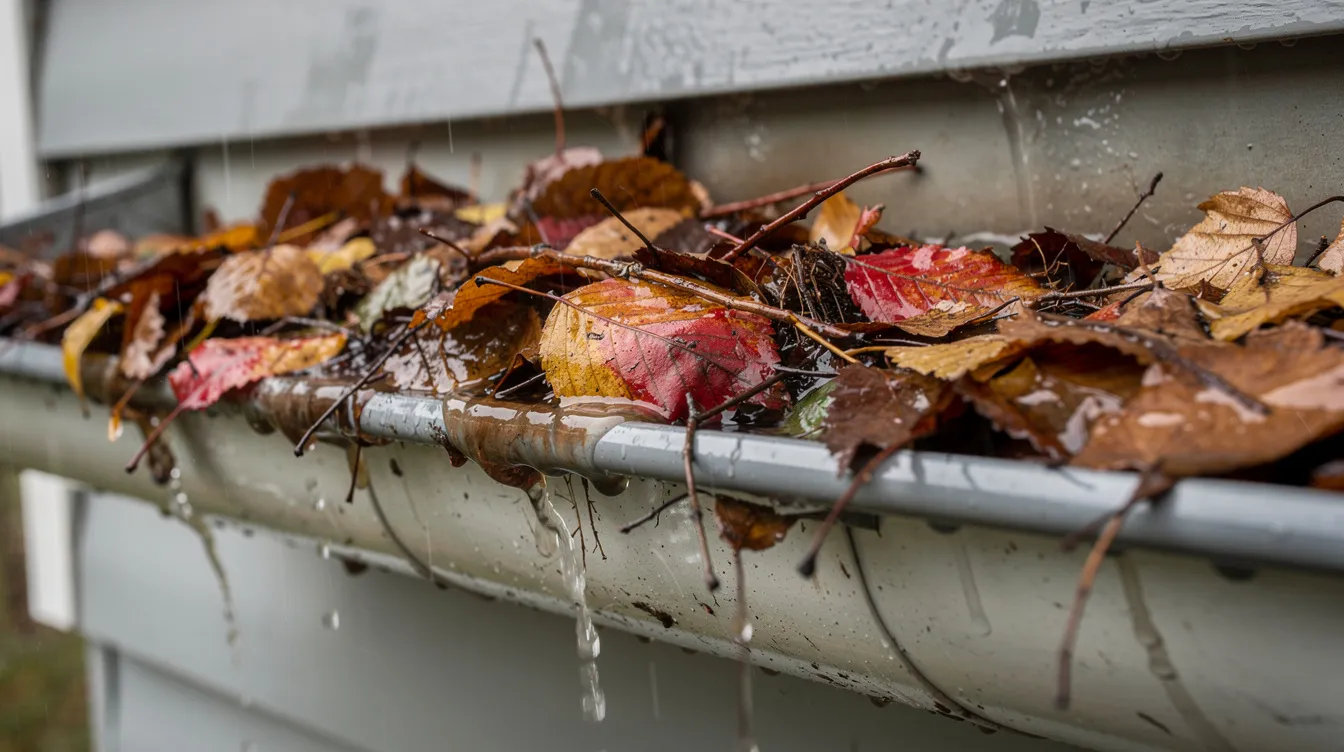
Your gutters have one critical job: catch rainwater running off the roof and channel it away from your home’s foundation, siding, and entryways. When they work, you barely notice them. When they don’t, the damage adds up fast.
In West Springfield and across Western Massachusetts, gutters face a punishing cycle – heavy spring rains, dense fall leaves from maples and oaks, and winter freeze-thaw that turns small problems into expensive ones. Clogged gutters during a severe October storm can send water cascading down walls, saturating the soil against your foundation and opening hairline cracks that lead to basement leaks and mold growth.
This step by step guide covers how to clean gutters safely, what gutter cleaning tools to use, how often to schedule the job, and when it makes sense to call a professional gutter cleaning service like Custom Gutters LLC. Whether you own a single-family home, a small commercial building, or a low-rise industrial property, the fundamentals are the same.
Gutter cleaning means removing fallen leaves, twigs, shingle grit, seed pods, and accumulated sludge from your gutters and downspouts. It does not include repairing leaks, replacing sections, or installing new systems – those are separate services.
When you clean gutters regularly, the gutter system channels water safely away from your:
When gutter cleaning is neglected, the consequences escalate quickly. Debris in gutters can attract pests like mosquitoes and rodents. Poorly maintained gutters can lead to mold growth inside walls. Ice dams from clogged gutters can cause structural damage to the roof deck during a New England winter. Gutters should be clean and well-maintained to avoid costly repairs – foundation water damage alone typically runs $2,300 to $7,300 for sealing or interior drainage, and far more if the problem compounds over multiple seasons.
Working from a ladder is the single greatest risk of DIY gutter cleaning. Ladder-related falls cause roughly 500,000 emergency room visits and about 300 deaths annually, and overreaching – one of the most common mistakes – contributes to 34–37% of elder ladder injuries. Before you begin cleaning, slow down and prepare deliberately and follow a few basic safety tips.
Ladder safety precautions:
Protective gear checklist:
Always have a second person on the ground as a spotter. Keep kids and pets away from the work zone. It is best to clean gutters in dry weather for safety – never work during lightning, high winds, or icy conditions. Always wear protective gear while cleaning gutters to reduce the risk of injury significantly.
Homeowners with multi-story buildings should consider professional gutter cleaning services. If you are uncomfortable with heights, hire professionals rather than risk a fall. Custom Gutters LLC handles gutter cleanings and repairs for properties of all sizes across West Springfield and surrounding towns.
Having the right tools helps you clear gutters quickly and reduces mess and damage to your gutter system.
Hand-cleaning tools:
| Tool | Purpose |
|---|---|
| Gutter scoop | A gutter scoop helps remove debris effectively – shaped to fit the gutter profile |
| Plastic trowel | Scrapes stubborn sludge from the channel floor |
| 5-gallon bucket | Hook it to the ladder to collect debris as you go |
| Stiff brush | Loosens caked-on dirt and shingle grit |
Flushing tools:
Power-assisted options:
Support items that make the job easier:
Professional cleaners have specialized equipment for hard-to-reach areas. Crews like Custom Gutters LLC use commercial-grade blowers, vacuums, and safety harnesses to clean the gutters thoroughly on larger or taller buildings.
This is the most reliable method for most West Springfield homeowners because it lets you see inside the gutters and inspect for damage while you work.
1. Walk-around inspection. Before touching the ladder, walk the perimeter of your house. Look for sagging sections, visible debris buildup, staining on walls, and downspouts that may be disconnected or crushed. Inspect downspouts regularly to prevent clogs that affect gutter drainage.
2. Set up your ladder. Position it near a downspout or corner on stable, level ground. Attach your bucket or contractor bag to the ladder rung. Clear the ground area beneath you.
3. Remove debris section by section. Start near a downspout and work away from it. Use a gutter scoop or gloved hands to place debris into the bucket. Avoid pushing material into downspout openings – that creates clogs deeper in the system.
4. Flush the gutters. Use a garden hose to flush out gutters after debris removal. Run water toward each downspout, watching for proper flow. This step reveals leaks, low spots, and improper pitch. Water should flow freely toward every downspout without pooling.
5. Clear the downspouts. Tap elbows to dislodge packed other debris. For a clogged downspout, feed a plumber’s snake through or spray water upward from the bottom using a vacuum hose or pressure washer attachment. If water backs up, you may need to disconnect the elbow and remove the blockage by hand.
6. Final walk-around. Confirm that water is discharging several feet away from the home’s foundation. Check that downspout extensions are in place and water isn’t pooling near steps, driveways, or landscaping.
Ground-based gutter cleaning methods reduce fall risk significantly, though they may not let you inspect gutter seams and hangers closely.
Leaf blower method: Attach a curved gutter nozzle to your leaf blower and walk the perimeter, blowing dry leaves and dust out of the channel. This works well for routine maintenance on gutters with light buildup. Rake or bag the blown debris from the yard afterward, and wear eye protection – flying debris is a real hazard.
Garden hose with a gutter wand: A dedicated gutter cleaning wand hooks onto a standard garden hose and curves over the gutter edge, allowing water to flush moderate buildup from the ground. This is a reliable method for maintenance cleanings between deeper seasonal jobs, but it won’t handle packed, wet leaves or heavy sludge.
Wet/dry vacuum with extension wands: These kits provide powerful suction and reach second-story gutters quickly. Drawbacks include weight, awkward handling, and hose clogs on wet leaves and twigs. They work best on relatively clean systems and newer gutters.
When debris is compacted, when you see standing water that won’t drain, or when the home is taller than two stories, switch to a ladder-based or professional cleaning approach.
Clean your gutters at least twice a year – once in late spring (May–June) after seed pods and blossoms drop, and once in late fall (late October–November) after most leaves have fallen. Gutters should be cleaned at least twice a year to keep the system functional through every season.
The frequency of gutter cleaning should be based on local tree coverage and weather conditions. Homes under large maples, oaks, or pines – common along the Connecticut River corridor – may need three or four cleanings per year. You should clean your gutters whenever you notice:
Ice dams can form in clogged gutters during winter, trapping meltwater under shingles and causing roof and ceiling damage. Regular gutter cleaning can prevent pest infestations by eliminating the standing water and organic matter that mosquitoes and rodents thrive in.
Commercial and industrial properties with larger roof areas and flat roofs may require more frequent inspections, especially around internal drains and scuppers.
You can always clean the gutters, but preventing debris buildup with smart solutions saves time and reduces risk over the long term.
Types of gutter guards:
| Guard Type | Best For | Limitations |
|---|---|---|
| Screen guards | Large leaves, twigs | Pine needles and fine particles pass through |
| Micro-mesh | Fine-weave mesh guards keep out leaves and debris of all sizes | Higher cost, may need professional installation |
| Reverse-curve | Heavy leaf loads | Water can overshoot in downpours; visible from ground |
| Foam inserts | Budget DIY option | Degrades in moisture, can trap mold and algae |
Gutter guards block debris while allowing water to flow into the channel. Installing gutter guards minimizes the need for frequent cleaning, though annual inspections remain necessary – fine pollen and shingle granules can still accumulate on top of guard surfaces. Some gutter guards require minimal maintenance to function properly, and gutter guards can reduce the risk of pest infestations by keeping organic matter out of the channel. Install gutter guards to block debris effectively, especially if your property has heavy tree cover.
Other preventative steps:
Custom Gutters LLC installs gutter guards and seamless gutters sized for local rainfall, improving long-term performance for homes and commercial buildings alike. Inspect gutters regularly to catch problems early – at the start of each season or as part of a recurring service plan.
The right choice depends on your building’s height, roof pitch, surrounding trees, your comfort with ladders, and available time.
DIY advantages:
Professional advantages:
Professional gutter cleaning costs between $140 and $300, and you can expect to pay around $162 on average for a standard cleaning. For detailed local pricing, see our gutter cleaning cost guide for Massachusetts. A professional gutter cleaner can combine tasks – cleaning, adjusting pitch, resealing corners, and replacing damaged sections – saving you additional trips up the ladder.
If you see recurring problems like sagging gutters, chronic overflow, or water near the foundation even after cleaning, request a free estimate from Custom Gutters LLC.
Sometimes the problem isn’t just dirty gutters. Older, undersized, or damaged systems may need repair or full replacement.
Signs your gutters need repair:
When your system has multiple patched seams, chronic sagging, or repeated leaks – especially on gutters installed before the early 2000s – replacement is often more cost-effective than ongoing repairs.
Seamless gutters are a modern solution that eliminates most joint-related failures. Continuous lengths mean fewer leak points, better appearance, and lower maintenance over time. Custom Gutters LLC offers seamless gutter installation for residential, commercial, and industrial properties, backed by a five-year labor warranty and 20-year manufacturer warranties.
Regular maintenance paired with occasional professional inspections is the most reliable method to keep water damage, costly repairs, and structural problems from sneaking up on you. Whether you handle the job yourself each spring and fall or schedule recurring service with a local contractor, the important thing is that the work gets done – before the next big rain.
Ready to protect your home? Contact Custom Gutters LLC for a free estimate on gutter cleaning, gutter guard installation, or a full system upgrade. We serve West Springfield and communities within a 20-mile radius with the local experience and warranties your property deserves.