Start The Process
Submit your contact details & we'll reach out to you shortly.

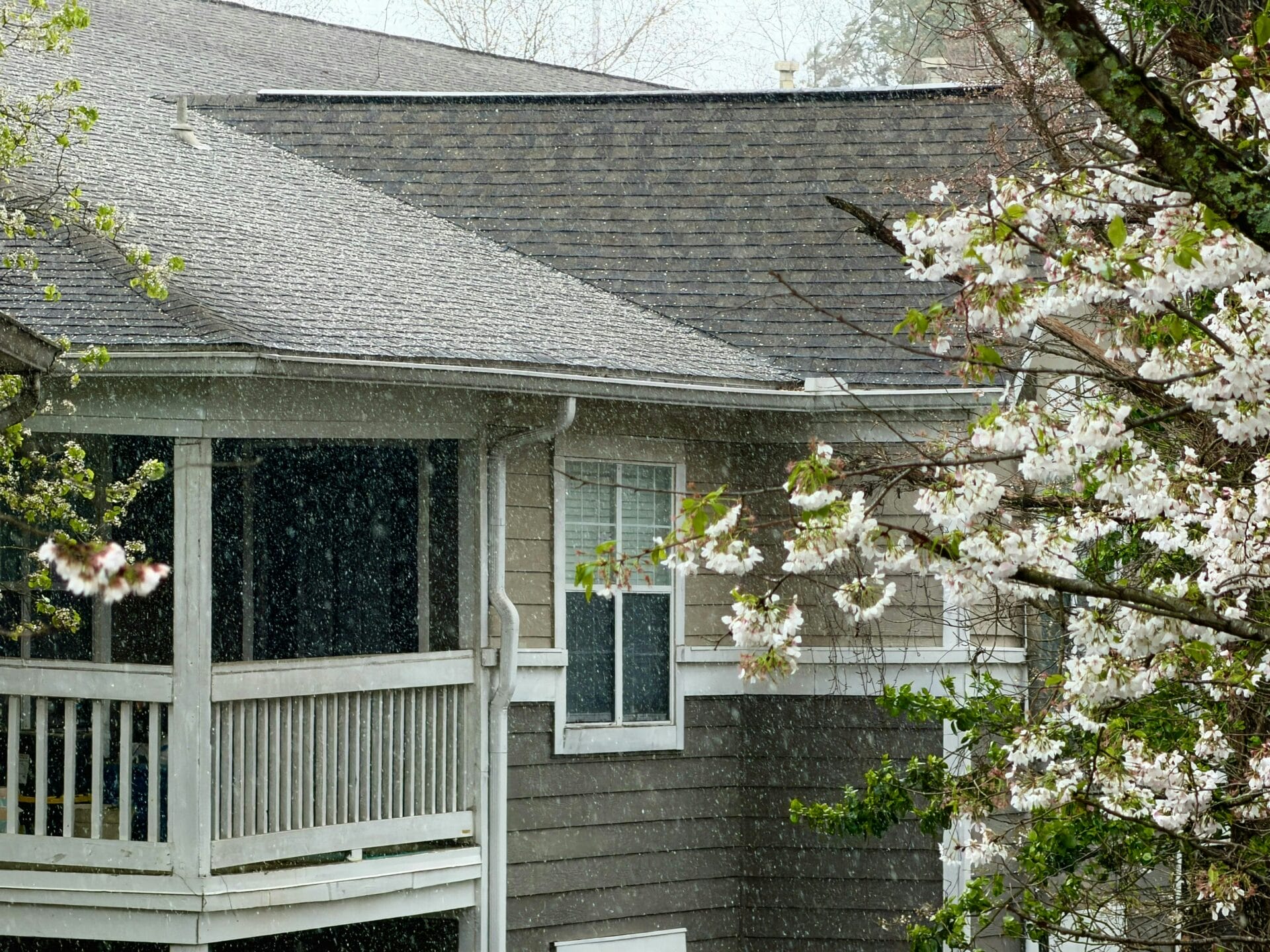
Winter in Massachusetts is hard on gutters. By the time April rolls around, your gutters have been through months of snow, ice, freeze-thaw cycles, and wind — and the debris that built up through fall and winter is now sitting in a wet, compacted layer at the bottom of your gutter channels. Spring also brings its own challenges: heavy rainfall, seed pods, pollen, and blossoms that can clog a gutter system just as effectively as fall leaves.
Spring gutter cleaning isn’t just about tidying up after winter. It’s about making sure your gutters are fully functional heading into the rainiest stretch of the Massachusetts year. A clogged or damaged gutter going into spring is a gutter that’s going to overflow during the first heavy April or May rainstorm — and that overflow goes straight to your foundation, your fascia, and your landscaping.
The good news is that a thorough spring cleaning and inspection doesn’t take long when you know what to look for. Here’s exactly what to check.
Timing matters. Clean your gutters too early and you’ll be pulling out the ladder again a few weeks later when the maple seed pods and oak tassels finish dropping. Clean them too late and you risk heading into the heavy spring rain season with clogged gutters.
For most Western Massachusetts homeowners, the sweet spot is late April through mid-May. By then the worst of the spring tree debris has fallen, temperatures are consistently above freezing, and you’re ahead of the peak spring rainfall window. If you had ice dams this past winter or haven’t cleaned your gutters since last fall, don’t wait — get it done as soon as temperatures are consistently above freezing, even if that means a second quick clean in May.
Work through this list top to bottom for a complete spring gutter inspection and cleaning.
Start by removing everything that’s accumulated over winter and early spring — leaves, twigs, shingle grit, seed pods, pollen buildup, and any compacted sediment sitting at the bottom of the channel. Don’t just push debris toward the downspout. Remove it from the gutter entirely so it doesn’t create a new clog downstream.
Pay particular attention to corners and low points in the gutter run where debris tends to collect and compact. These spots are where blockages most commonly start.
Once the debris is cleared, flush each gutter run with a garden hose from the end farthest from the downspout toward the downspout outlet. This does two things: it clears any fine debris left behind after the manual cleaning, and it lets you see whether water is flowing toward the downspout properly or pooling in sections of the gutter.
If water pools in a section that looks visually level, that section may have lost its pitch over the winter — a common issue after ice dam stress or heavy snow loads. Note where it pools so you can address the pitch or flag it for a professional to look at.
Downspouts are where most spring gutter failures actually happen. They clog internally from debris that washes down through winter, and because you can’t see inside them, it’s easy to miss a blockage until water is overflowing over the top of your gutters during a rainstorm.
Flush each downspout from the top with a garden hose on full pressure. Water should exit freely at the bottom. If it backs up or drains slowly, the downspout is partially blocked. A plumber’s snake or repeated high-pressure flushing will usually clear it. If the blockage is stubborn, it may be time to call a professional — a blocked downspout left untreated will cause overflow damage quickly once spring rains arrive.
Also check where your downspouts discharge. Extensions should be directing water at least four to six feet away from your foundation. If downspout extensions have shifted or come loose over winter, reattach or replace them now before the rain season starts.
Massachusetts winters are tough on gutters, and spring is when you’ll find what the season left behind. Walk the full perimeter of your home and check for:
Sagging sections. Ice and snow weight can pull gutters away from the fascia or cause them to sag between hangers. A sagging gutter won’t drain properly and will hold standing water all season.
Loose or missing hangers. Hangers that pulled out over winter need to be reattached. This is usually a straightforward fix but needs to happen before the gutter fills with spring rainwater and the weight causes further damage.
Cracks or holes. Small cracks at seams or along the gutter body can often be sealed with gutter caulk. Larger cracks or sections with visible holes may need section replacement. Our gutter cleaning and repair service covers both cleaning and minor repairs in a single visit.
Rust or corrosion. Surface rust on older aluminum gutters is worth monitoring. Widespread rust or corrosion that’s compromising the gutter wall is a sign that replacement may be coming. If your gutters are more than 20 years old and showing consistent rust, it’s worth getting a professional opinion on whether repair or full replacement makes more sense.
Fascia board condition. Look at the wood fascia directly behind your gutters. Dark staining, soft spots, or visible rot means water has been getting behind the gutter — likely from an overflow or a leak at the back edge. Rotted fascia needs to be addressed before it gets worse, and the gutter issue causing it needs to be fixed at the same time.
Gutters need to slope slightly toward the downspout — typically about a quarter inch of drop for every ten feet of gutter run — to drain properly. After a Massachusetts winter, it’s not uncommon for sections of gutter to shift out of proper pitch from the weight of ice and snow.
The easiest way to check pitch is to run water through the gutter after cleaning and watch how it moves. Water should flow steadily toward the downspout with no pooling. If it sits in sections or drains sluggishly, the pitch needs adjustment. This is a job best handled by a professional since it involves repositioning hangers and checking the full gutter run for proper slope.
If you have gutter guards installed, spring is the time to inspect them after their first full winter. Check that all sections are still seated properly and haven’t shifted, lifted, or been damaged by ice. Flush water over them to confirm flow is working the way it should. Fine debris — pine needles, shingle grit, pollen — can accumulate on top of or inside some guard systems over winter and may need a rinse or light brush to clear.
If you’ve been dealing with frequent clogs and don’t have guards yet, spring is a great time to consider adding them. Guards won’t eliminate maintenance entirely but they significantly reduce how often you need to clean and how much debris gets into the system. Learn more about the gutter guard options we install for Massachusetts homes.
Spring is when birds, wasps, and other pests start looking for nesting spots — and debris-filled or sheltered gutters are a favorite target. During your spring cleaning, check for any signs of nesting material, mud dauber activity, or insect buildup, particularly near downspout outlets and corners. Clear any nesting material and make sure your gutters aren’t providing an easy entry point to your roofline.
Not everything on this checklist needs a professional — clearing debris and flushing downspouts are tasks a comfortable homeowner can handle. But some things are worth flagging for a pro:
If your spring inspection turns up several of these at once, it may be more cost-effective to have a professional handle everything in a single visit rather than addressing each issue separately. Our gutter cleaning and repair service is set up exactly for this — we clean, inspect, and handle repairs in one go so you’re not scheduling multiple visits.
Once your gutters are clean and any issues are addressed, you’re set for the spring and summer rain season. The next cleaning you’ll need is in late fall — late October through November — after the leaves have finished dropping and before the first hard freeze. We cover the full schedule in our guide on how often to clean your gutters in Massachusetts.
If spring cleaning reveals that your gutters are reaching the end of their lifespan — persistent leaks, widespread sagging, rust, or sections that keep pulling away — it may be worth having a conversation about a full replacement before you’re dealing with the damage that failing gutters cause. Seamless aluminum gutters installed properly last 20 to 30 years and require significantly less maintenance than older sectional systems. You can learn more about our seamless gutter installation service if that conversation makes sense this spring.
If climbing a ladder around your home isn’t how you want to spend a spring weekend — or if your inspection has turned up issues you’d rather have a professional handle — Custom Gutters MA is here to help. We’re a family-owned business with over 20 years of experience serving homeowners across Western Massachusetts, and we handle everything from routine spring cleanings to full gutter replacements.
Contact us today for a free estimate. We’ll get back to you within 24 hours.
When is the best time to clean gutters in spring in Massachusetts? Late April through mid-May is the ideal window for most Western Massachusetts homeowners. This gets you past the worst of the spring tree debris — maple seeds, oak tassels, pine pollen — while keeping you ahead of the heavy spring rain season.
What debris should I expect to find in my gutters after a Massachusetts winter? Expect a mix of compacted fall leaves that weren’t fully cleared, shingle grit that washed down over winter, twigs from wind and ice storms, and early spring debris like seed pods and pollen. Downspouts are often partially blocked from fine material that washed in during snowmelt.
Do I need to clean my gutters if I have gutter guards? You still need an annual inspection and flush even with guards installed. Spring is the right time to do it — check that guards are properly seated after winter, clear any debris sitting on top, and flush to confirm water is flowing freely. Learn more about gutter guards for Massachusetts homes.
How do I know if my gutters need repairs rather than just cleaning? Signs include sagging sections, visible cracks or holes at seams, water staining on fascia boards, gutters pulling away from the roofline, or water overflowing during rain even after cleaning. If you notice any of these during your spring inspection, it’s worth getting a professional to take a look.