Best Gutters for Heavy Rain in West Springfield, MA
Western Massachusetts doesn’t get gentle rain. Between Nor’easters that stall over Hampden County, summer thunderstorms that dump water in sheets, and the remnants of tropical systems that push inland, homes in West Springfield face some of the most demanding rainfall conditions in New England. Choosing the right gutters for heavy rain isn’t optional here – it’s the difference between a dry basement and a costly repair.
Quick Answer: Best Gutters for Heavy Rain in Our Area
For most homes we see in West Springfield and nearby towns, our primary recommendation is straightforward: seamless 6-inch K-style aluminum gutters paired with 3×4-inch downspouts. This combination delivers the drainage capacity, durability, and cost effectiveness that heavy rainfall demands.
Best gutters for heavy rain (most residential homes): Seamless 6-inch K-style aluminum gutters with 3×4-inch oversized downspouts, properly sloped and installed with hidden hangers at tight spacing.
When to go bigger: Homes with very large roof areas, multiple roof valleys, or long gutter runs over 40–50 feet may need 7-inch K-style gutters. Commercial buildings and industrial facilities often require box gutters or oversized half round gutters for adequate water capacity.
Don’t want to do the math yourself? Custom Gutters LLC offers free on-site inspections where we measure your roof area, assess your roof slope, and design a custom proposal – no guesswork on your end.
Standard 5-inch gutters often overflow during torrential downpours, and 6-inch gutters are recommended for heavy rainfall areas like ours.
How Heavy Rain Affects Gutters Around West Springfield
Spring storms, hurricane remnants, and convective summer downpours regularly push rainfall intensity in Hampden County well past what most older gutter systems were designed to handle. The 100-year, 1-hour rainfall rate for Springfield is approximately 3.3 inches per hour – a rate that overwhelms undersized channels fast.
“Heavy rain” doesn’t mean all-day drizzle. It means short, intense storms where roof runoff spikes in minutes and can exceed what current gutters and undersized downspouts can carry.
Roof size, steepness, and valley placement can concentrate thousands of gallons per storm into short gutter runs. Steep roofs shed water faster, compounding the problem.
Many older homes in West Springfield, Agawam, Chicopee, and Springfield were built with 5-inch aluminum gutters that are often undersized for today’s intense storms.
Heavy rainfall areas require gutters with high capacity and durability. Clogged gutters can lead to overflow and foundation damage, especially when debris blocks already-tight systems.
Choosing Gutters for Heavy Rain: Key Factors
Choosing gutters for heavy rain is a design decision, not just a product purchase. The right gutter system accounts for your specific roof, your local rainfall intensity, and how water moves once it leaves your shingles.
Gutter size (width and depth) – the single biggest factor in drainage capacity.
Gutter profile – K-style vs half round gutters vs box gutters – affects both flow and aesthetics.
Total roof drainage area and roof pitch – larger and steeper roofs generate more runoff, faster.
Number and location of downspouts – downspouts matter as much as channels. Even the best gutters for heavy rain will overflow if downspout count or downspout size is wrong.
Building type – single-family residential homes, multifamily buildings, small commercial buildings, and industrial facilities all have different needs. Property managers can learn more about commercial gutter maintenance for Western MA properties.
Complete high-capacity systems require adequate downspouts and correct pitch – one without the other leaves you vulnerable.
Gutter Size: Why 6-Inch Often Beats 5-Inch in Heavy Rain
When we talk about gutter size or how to size gutters, we’re talking about width and depth – the cross-section that determines how much water the channel can carry. This is the most important spec for gutters for heavy rain.
6-inch gutters hold about 40% more water than 5-inch gutters. In real terms, a 5-inch K-style gutter holds roughly 1.2 gallons per linear foot, while a 6-inch holds about 2.0 gallons per foot – a 67% increase in volume per foot.
A 6-inch seamless gutter holds about 40% more water than a 5-inch, which translates directly into fewer overflows during intense storms.
When 5-inch is acceptable: Smaller, low-slope roof sections, covered porches, or secondary rooflines where the same width as existing trim works fine.
When 6-inch is necessary: Big roof planes, multiple roof valleys, long runs over 40–50 feet, or any section where current gutters overflow during storms.
7-inch inch K-style gutters carry roughly 25% more volume than 6-inch versions. These are specialty solutions for very large homes, commercial roofs, or situations where calculations show a larger gutter is the only way to prevent overflow. Custom Gutters LLC can provide these when standard sizes fall short.
Upgrading to 6-inch or 7-inch gutters captures more runoff, but a wider gutters profile must be matched with appropriately sized outlets – 3×4-inch downspouts for 6-inch gutters, for example – or the capacity gains are wasted.
Gutter Profiles: K-Style, Half Round, Box, and Fascia Gutters
Gutter profile – the cross-sectional gutter shape – affects both how much water the channel can carry and how it looks on your home. Different gutter styles suit different situations, especially when heavy rain performance is a priority.
K-style gutters: The flat-backed, crown molding profile is the most common for West Springfield homes. K-style gutters are popular for their high water capacity – they hold more water than traditional half-round gutters of the same width, making them ideal when heavy rainfall is a concern.
Half round gutters: These traditional rounded gutters have a classic, curved shape often used on historic homes. They usually need to be oversized (6-inch or larger) or combined with extra downspouts to match K-style performance in heavy rain. They promote fast interior flow and shed debris well.
Box gutters: Rectangular and very high capacity, box gutters can hold two to three times the water of K-style gutters. They’re common on commercial buildings, flat or low-slope roofs, and older brick buildings in downtown Springfield. They require expert fabrication and waterproofing.
Custom fascia gutters: Integrated into or replacing fascia boards, these offer high capacity and clean modern lines. More common on new construction or major exterior remodels.
Component compatibility matters: Each profile needs matching hangers, end caps, inside and outside corners, miters, and guards. K-style and half round components are not interchangeable – mixing profiles leads to poor installation and leaks.
Best Materials for Gutters in Heavy Rain: Aluminum, Steel, Copper
When comparing gutter materials, keep in mind that material doesn’t change hydraulic capacity – a 6-inch aluminum gutter holds the same volume as a 6-inch copper one. But the best gutter materials strongly affect durability, weight, and long-term performance under Massachusetts weather.
Aluminum gutters: Lightweight and rust resistant, aluminum is the go-to for most residential heavy-rain installs. Seamless aluminum can be formed on-site to exact lengths. For heavy rain and snow-load regions, 0.032-gauge aluminum is preferable over thinner 0.027-gauge – heavy-gauge materials are essential to withstand the weight of water and debris.
Steel gutters: Galvanized steel is stronger and more impact-resistant than aluminum, making it better for hail, heavy ice, or high-traffic conditions. The zinc coating delays rust, but galvanized steel gutters can eventually corrode once that coating wears. Good for tough commercial or industrial sites where strength matters.
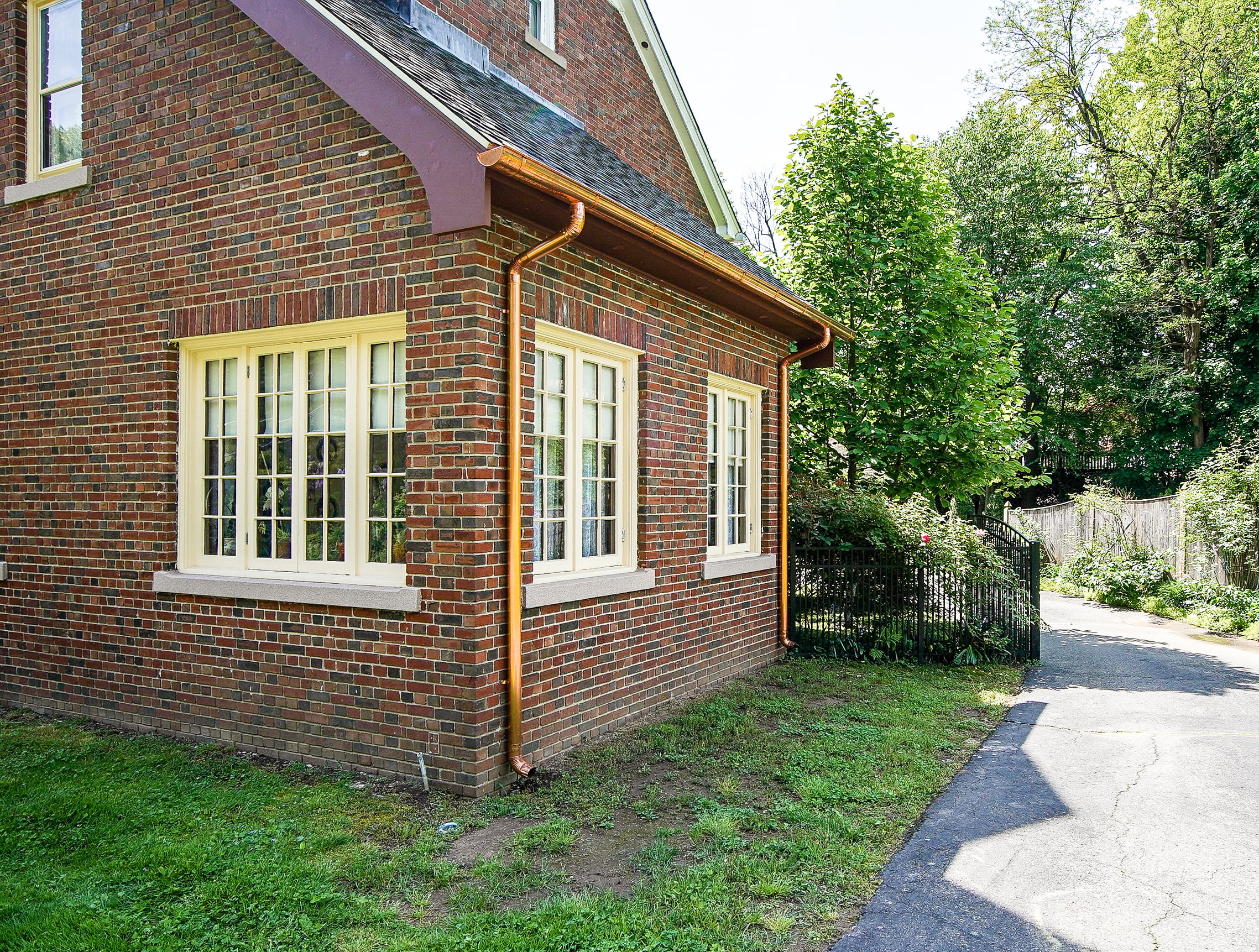
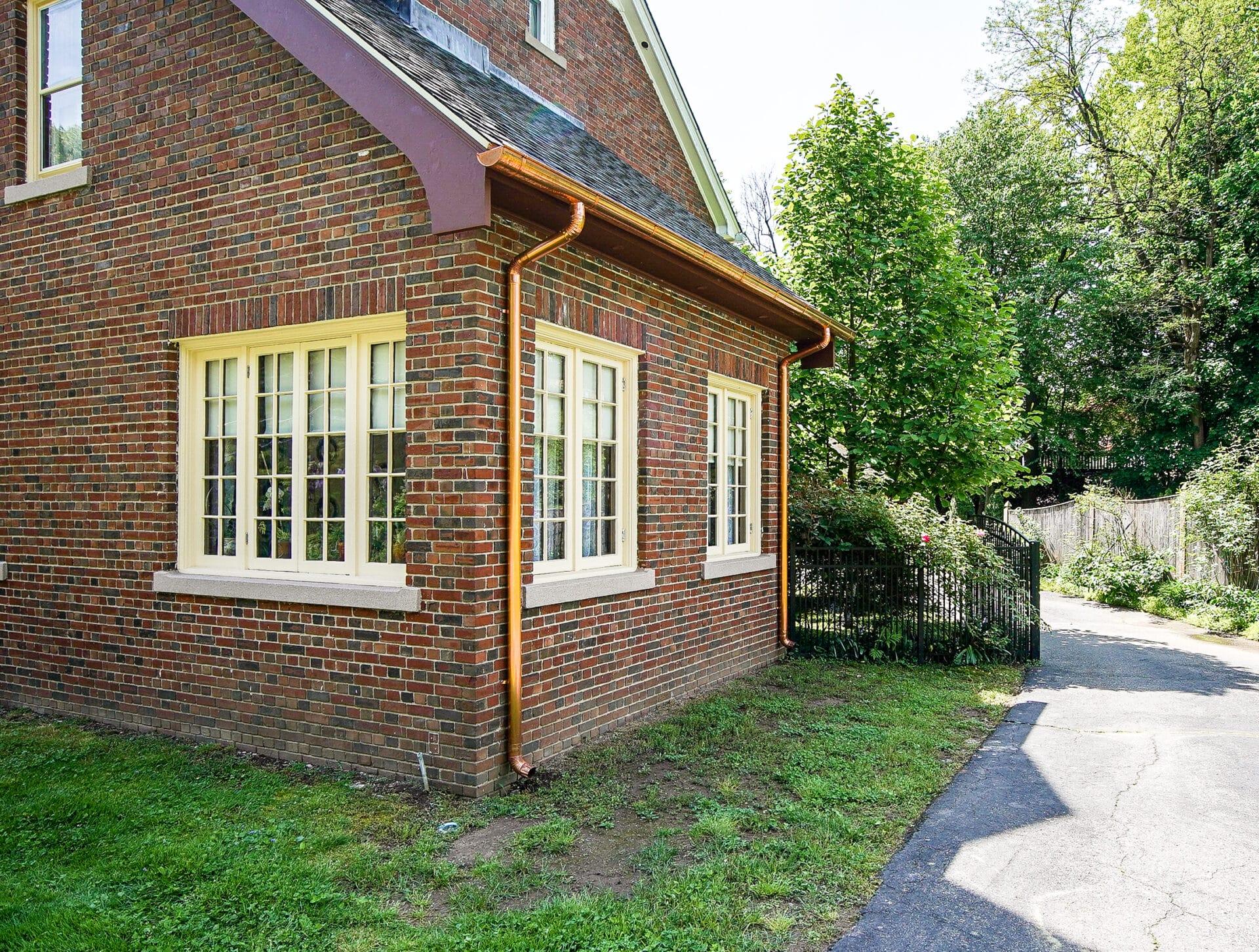
Copper gutters: A premium choice that can last over 50 years with proper care – many systems reach 80–100 years. Copper gutters develop a natural patina over time and are available in K-style and half round profiles. Often used on historic or high-end properties in Springfield and Longmeadow where appearance and longevity justify the higher cost.
Our recommendations: Aluminum for most homeowners seeking quality gutters at a reasonable cost. Galvanized steel for demanding conditions. Copper for showcase homes where lifetime durability matters.
Downspouts Matter: Getting Water Off the Roof and Away from the Foundation
Even correctly sized gutters will fail in heavy rain if downspout capacity is inadequate. This is one of the most overlooked factors in gutter installation, and one of the first things we check during inspections.
Standard vs oversized downspouts: Installing larger downspouts – specifically 3×4-inch rectangular downspouts instead of 2×3-inch – roughly doubles flow capacity. Oversized downspouts allow for quick drainage of large volumes of water. For 6-inch gutters for heavy rain, 3×4-inch is the minimum we recommend.
Spacing: A standard recommendation is one downspout for every 20–30 feet of gutter run in high-rain areas. Where roof valleys concentrate runoff, spacing should be tighter. Install downspouts near roof valleys to optimize drainage.
Fixing overflow without full replacement: Custom Gutters LLC often fixes chronic overflow by adding or upsizing downspouts rather than replacing the entire gutter system. Sometimes your old gutters just need better outlets.
Discharge: Downspouts must direct excess water well away from the foundation – using extensions, splash blocks, or underground drains. Some homeowners use rain chains for decorative effect, though traditional enclosed downspouts handle heavy rainfall more reliably. Proper discharge prevents basement moisture and frost-related foundation issues.
Seamless vs Sectional Gutters in Heavy Rain
Custom Gutters LLC primarily installs seamless gutters in aluminum and other metal gutters where appropriate. Understanding the difference between seamless and sectional systems helps explain why we lean this way – especially for gutters for heavy rain.
Seamless gutters reduce leak points by up to 90% compared to sectional systems. Sectional gutters have joints every 10–20 feet that can separate under the weight of water, ice, and debris. Fewer joints means fewer leak points and fewer failures.
Seamless gutters are made from a continuous piece of material, custom-formed on-site to the exact length of each gutter run. This eliminates most mid-run seams that commonly fail in sectional systems.
While seamless design doesn’t increase water volume versus sectional gutters of the same size, seamless gutters improve water flow efficiency during storms and are highly recommended for heavy rain areas.
End caps, inside and outside corners, miters, and outlet connections must still be properly sealed and fastened. Custom Gutters LLC backs workmanship with a five-year labor warranty plus 20-year manufacturer finish warranties where applicable.
System Design Details for Heavy Rain: Hangers, Slope, Guards, and End Caps
Capacity alone isn’t enough. Gutter installation details – the specifics of how your system is hung, pitched, and protected – determine whether new gutters actually perform during a Nor’easter-level downpour or end up just as problematic as the ones they replaced.
Hanger spacing: Hanging gutters with hidden brackets every 16–24 inches increases structural rigidity and prevents sagging when gutters fill momentarily during peak heavy rainfall or snow melt. Hidden hangers outperform old spike-and-ferrule systems.
Proper slope: A consistent slope toward each outlet – roughly ¼ inch of drop per 10 feet – helps prevent standing water in gutters. Too little slope causes ice buildup in winter; too much can overshoot water past end caps.
High-capacity outlets and sealed end caps: Correctly sized outlets and properly crimped end caps prevent leaks at the most stressed points in the system.
Gutter guards: Micro-mesh gutter guards perform best in heavy rainfall, allowing water through while preventing leaves from clogging the system. Gutter guards help maintain water flow during intense storms. Solid-surface guards may cause overflow in heavy rain because water sheets past the opening. Custom Gutters LLC installs guards sized for K-style and half round profiles used locally.
Proper maintenance: Even the best design needs inspection. Gutters should be cleaned at least twice a year to prevent blockages – more often if you have mature trees overhead. Regular gutter cleaning and repair catches problems from normal wear before they escalate.
Specialty Options: Oversized Half Round, Box, and Copper Systems
Some homes and buildings need more than standard K-style aluminum. Historic houses, large commercial roofs, and industrial facilities often require specialty gutter profiles to handle heavy rainfall and match architectural character.
Oversized half round gutters: 6-inch half round gutters or larger, in aluminum or copper, offer a curved interior that promotes faster flow and sheds debris. We recommend these for historic districts, older colonials, and high-end renovations where curb appeal and performance both matter.
Box gutters: Found on flat or low-slope roofs and some older brick buildings in downtown Springfield, box gutters have massive rectangular cross-sections that excel in heavy rainfall. They require expert fabrication, waterproofing, and integration with existing roof structures.
Copper systems: Copper gutters and downspouts with soldered joints provide heavy-rain reliability that lasts generations. While upfront costs are higher, they’re a lifetime investment for many properties – the kind of quality gutters that outlast the homeowner.
Specialized end caps, miters, hangers, and guards must be matched to these profiles and materials. Custom Gutters LLC sources and installs components correctly for every gutter profile we offer through our commercial gutter services.
Custom Gutters LLC: Our Process for Designing Gutters for Heavy Rain
As a family-owned gutter contractor based in West Springfield, we focus on matching each system to real roof and rainfall conditions. Many homeowners don’t realize how much their roof layout affects which gutters work – that’s what our inspections are for.
Free on-site inspection: We measure roof area, assess roof pitch, count roof valleys, evaluate current gutter size and downspout layout, and identify heavy-rain problem areas (corners, walkways, foundation zones).
Tailored recommendations: Seamless 6-inch K-style aluminum gutters are our default for residential gutter services, with galvanized steel, copper gutters, or specialty profiles suggested where appropriate.
Warranties and service: Five-year labor warranty, typical 20-year manufacturer finish warranties, plus ongoing gutter cleaning, gutter repair, and gutter guard installation to keep systems performing through every storm season.
Service area: We encourage homeowners and property managers in West Springfield, Agawam, Chicopee, Holyoke, Ludlow, and Springfield to schedule a free estimate for any property where current gutters overflow in heavy rain.
Signs Your Current Gutters Can’t Handle Heavy Rain (and When to Call Us)
Most homeowners don’t think about gutters until something goes wrong. If you notice problems during the next Nor’easter or summer thunderstorm, your system is telling you it’s time for an upgrade – or at least a professional evaluation.
Visible overflow signs:
Water spilling over gutter edges during downpours
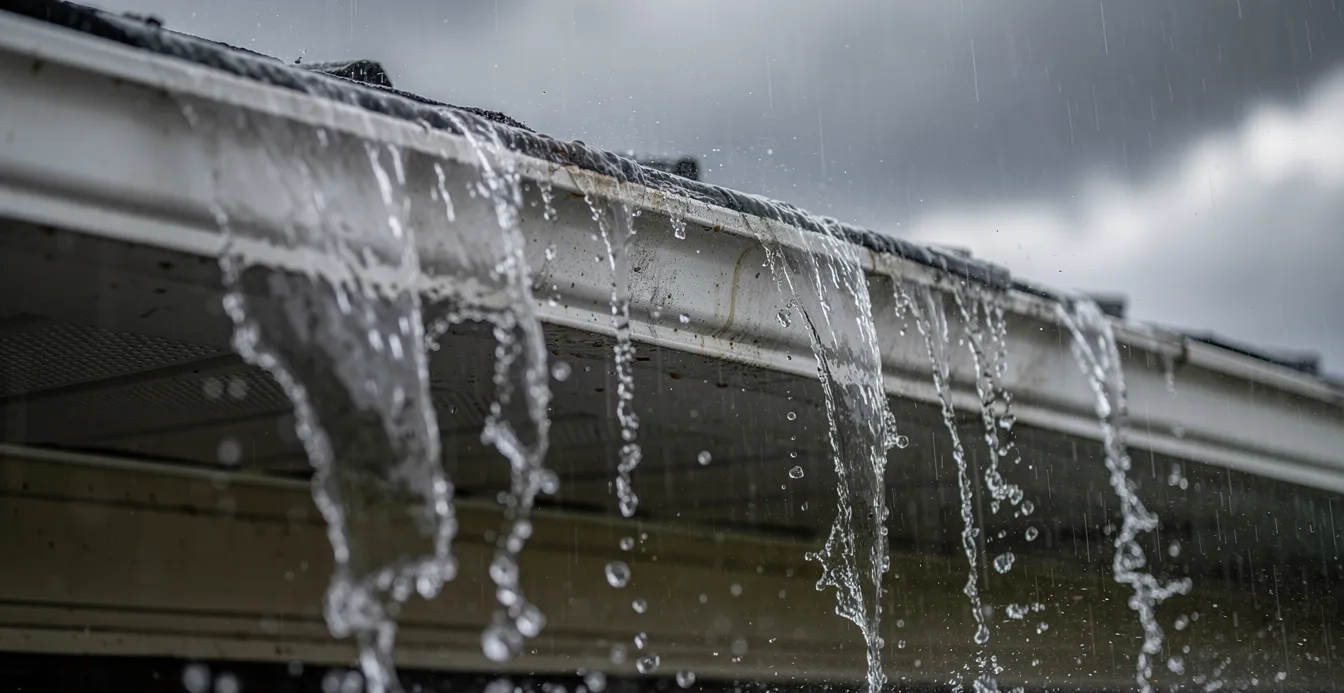
Waterfalls forming at corners or above entryways
Soil erosion or mulch washout directly below rooflines
Peeling paint or stains on siding and fascia boards
Basement dampness or water intrusion after storms
Structural and condition clues:
Sagging gutters or gaps between gutters and fascia
Leaking joints or separated end caps on sectional systems
Rusting on galvanized steel sections
Properly installed gutters shouldn’t pull away from the house – if yours have, poor installation or deterioration is likely the cause
When to act:
If a simple cleaning solves the problem, start there. But if your current gutters overflow repeatedly despite being clean, it’s time to consider new gutters – likely 6-inch seamless systems with upgraded downspouts and the right gutter profile for your roof.
Contact Custom Gutters LLC for a same-week inspection in the West Springfield area. We’ll tell you whether you need a full replacement, installing larger downspouts, or just targeted repairs to get through the next heavy rain season with confidence.We’ll tell you whether you need a full replacement, installing larger downspouts, or just targeted repairs to get through the next heavy rain season with confidence.
Professional Installation: Why It Matters for Heavy Rain Gutters
Choosing the right gutters is just the first step. Proper, professional installation is critical to ensure your gutter system performs as expected during heavy rain events. Poor installation can negate even the best materials and design choices.
Correct hanger spacing: Gutters must be hung with hidden brackets every 16 to 24 inches to prevent sagging when full of water and debris. Too few hangers lead to dips where water pools and overflows.
Proper slope: A consistent pitch of about 1/4 inch per 10 feet toward downspouts ensures water flows quickly and doesn’t stagnate. Incorrect slope causes standing water, increasing the risk of leaks and ice dams.
Downspout placement and sizing: Oversized downspouts placed near roof valleys and spaced every 20 to 30 feet allow fast drainage. Incorrect downspout size or spacing causes backups and overflow.
Sealing and fastening: End caps, corners, and outlet connections must be tightly sealed and fastened to prevent leaks, especially in seamless systems.
Integration with gutter guards: Guards must be installed to complement gutter flow, not obstruct it, particularly micro-mesh types that work best in heavy rain.
Professional installation ensures your gutter system operates at peak efficiency and durability, protecting your home from costly water damage.
Cost-Effective Choices for Gutters in Heavy Rain
While heavy rain demands robust gutter systems, cost effectiveness remains a priority for most homeowners. Balancing upfront costs with long-term value is key.
Material selection: Aluminum gutters offer an excellent balance of durability, rust resistance, and affordability. They are lightweight, easy to install, and widely available in seamless formats.
Seamless gutters: Though typically more expensive upfront than sectional gutters, seamless gutters reduce maintenance and leak repair costs over time, making them cost effective in the long run.
Right sizing: Installing appropriately sized gutters and downspouts avoids overspending on unnecessarily large systems. A 6-inch seamless aluminum gutter with 3×4-inch downspouts suits most West Springfield homes well.
Targeted repairs and upgrades: Sometimes upgrading downspouts or adding guards offers a cost-effective alternative to full gutter replacement.
Warranties and service plans: Choosing a contractor like Custom Gutters LLC who offers free estimates, warranties, and maintenance services protects your investment and reduces unexpected expenses.
Maintenance Tips to Keep Gutters Performing in Heavy Rain
Even the best gutters require regular maintenance to handle heavy rain reliably.
Biannual cleaning: Gutters should be cleaned at least twice a year, ideally in spring and fall, to remove leaves, twigs, and debris that cause clogs.
Inspect after storms: Check for sagging, leaks, and overflow spots following heavy rains to catch issues early.
Clear downspouts: Ensure downspouts are free of blockages and direct water well away from foundations.
Check slope and hangers: Over time, gutters can shift or loosen. Confirm the slope remains consistent and hangers are secure.
Gutter guard upkeep: Keep guards free of debris buildup and repair any damage promptly.
Regular maintenance preserves your gutter system’s capacity and prevents water damage to your home.
Frequently Asked Questions (FAQs)
1. What is the best gutter size for heavy rain in West Springfield?
A 6-inch seamless K-style gutter paired with 3×4-inch downspouts is the best choice for most homes in West Springfield. It balances water capacity, durability, and cost effectiveness for the region’s intense rainfall.
2. Are seamless gutters worth the extra cost?
Yes. Seamless gutters reduce leak points by up to 90%, improve water flow during storms, and require less maintenance. Over time, they save money on repairs and replacements.
3. How often should gutters be cleaned in heavy rain areas?
At minimum, gutters should be cleaned twice a year. Homes with many trees or after severe storms may require more frequent cleaning to prevent clogs.
4. Can gutter guards handle heavy rain?
Micro-mesh gutter guards are effective for heavy rain as they allow water to flow freely while blocking leaves and debris. Avoid solid-surface guards that can cause overflow.
5. How many downspouts does my home need?
A general rule is one downspout for every 20 to 30 feet of gutter. In areas with roof valleys or heavy runoff, closer spacing or additional downspouts may be necessary.
6. What materials are best for gutters in heavy rain?
Aluminum is the most cost-effective and rust-resistant option for most homes. Galvanized steel offers added strength but requires maintenance. Copper is premium and long-lasting but more expensive.
7. Is professional installation necessary?
Yes. Proper installation ensures correct slope, hanger spacing, downspout placement, and sealing, all critical to preventing leaks and overflow during heavy rain.
8. Can I upgrade just the downspouts instead of replacing gutters?
In some cases, yes. Upsizing or adding downspouts can improve drainage and reduce overflow without full gutter replacement. A professional inspection can determine if this is sufficient.
Why Choose Custom Gutters LLC for Your Heavy Rain Gutter Needs?
As a family-owned business serving West Springfield and surrounding areas, Custom Gutters LLC combines local expertise with quality workmanship.
Free on-site inspections: We evaluate your roof and rainfall conditions to design a tailored gutter system.
Professional installation: Our team ensures proper hanger spacing, slope, downspout sizing, and guard installation.
Warranty-backed service: Five-year labor warranties and 20-year manufacturer finish warranties provide peace of mind.
Comprehensive offerings: From seamless gutters and gutter guards to cleaning and repairs, we cover all your gutter needs.
Local knowledge: We understand Western Massachusetts weather and building styles, ensuring solutions that work year-round.
Contact Custom Gutters LLC today to schedule your free estimate and protect your home from heavy rain damage with a cost-effective, professionally installed gutter system.